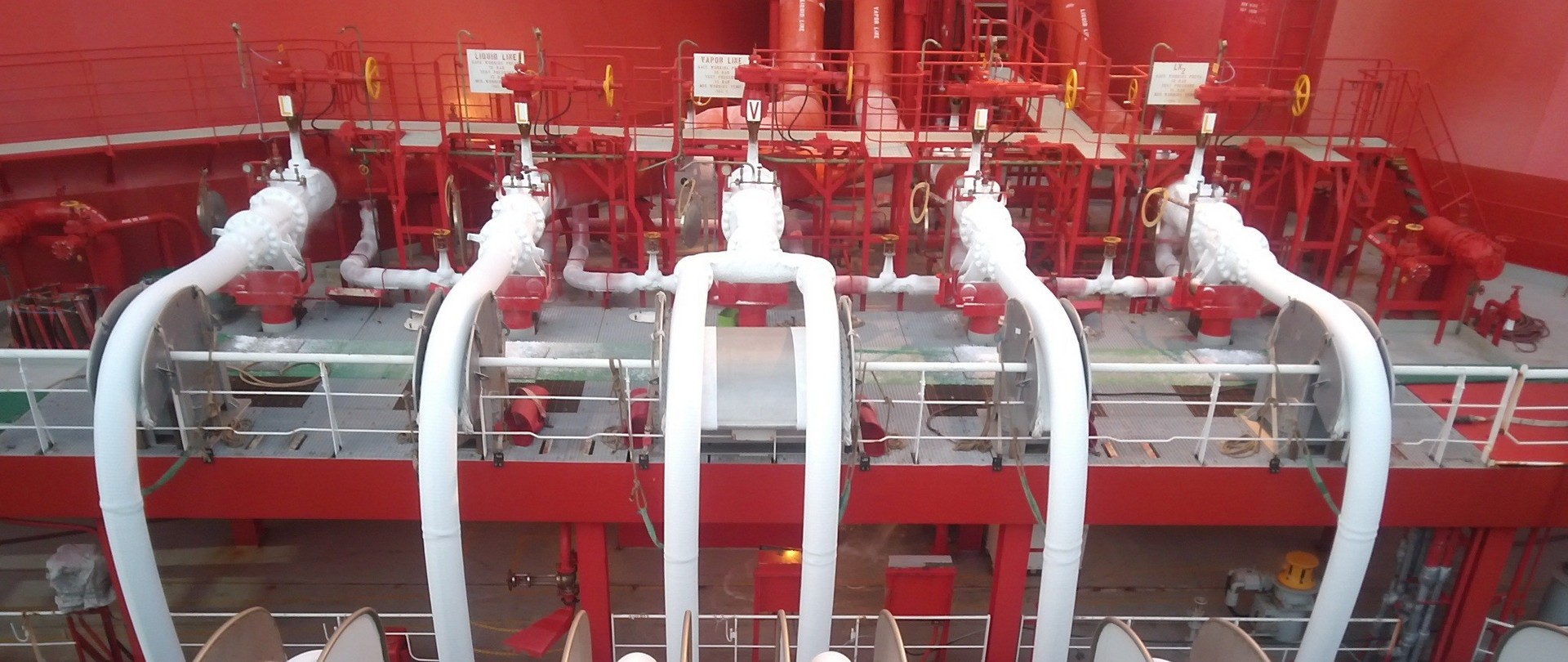
The process of transferring LNG from a carrier vessel to an FSRU is known as Ship-to-Ship (STS) transfer. This is one of the most technically sophisticated operations in the maritime energy industry, requiring precision coordination, specialized equipment, and rigorous safety protocols.
Unlike conventional cargo transfers, LNG must be handled at cryogenic temperatures—around -162°C. At this temperature, LNG occupies approximately 1/600 the volume of natural gas in its gaseous state, making it practical to transport across oceans. However, this extreme cold introduces unique challenges: equipment must be specially designed to withstand thermal shock, any moisture in the transfer system will instantly freeze, and the slightest leak could result in rapid vaporization and potential safety hazards.
A typical STS transfer operation can move up to 200,000 cubic meters of LNG at flow rates reaching 9,000-12,000 m³ per hour through flexible cryogenic hoses, with the entire transfer process taking 24-48 hours depending on cargo volume and operational conditions.
An STS operation unfolds in carefully choreographed stages. Understanding this process reveals both the technical sophistication and the meticulous attention to safety that defines modern LNG operations.
STS operations employ multiple layers of safety systems, each designed to detect problems early and respond automatically if needed. These systems reflect decades of industry learning and continuous improvement in operational safety.
Emergency Shutdown (ESD) systems can be activated from either vessel and will immediately close all transfer valves, stopping the flow of LNG within seconds. The system is connected to numerous sensors monitoring pressure, temperature, vessel position, and more. Any parameter exceeding safe limits triggers automatic shutdown.
Emergency Release Couplers (ERC) represent the last line of defense. In the event of a vessel drift-off scenario—where one vessel begins moving unexpectedly relative to the other—automated monitoring systems detect the motion through protection wire system. If the vessels separate beyond safe limits, the ERCs not only shut valves but physically release the hoses, allowing them to separate without damage. This prevents a scenario where hoses could rupture due to excessive tension.
Vapor management systems ensure that as LNG is transferred into the FSRU's tanks, the displaced vapor is safely returned to the carrier or processed through onboard equipment. Uncontrolled pressure buildup could trigger safety relief valves to vent gas to atmosphere—an outcome avoided through careful monitoring and active pressure management.
Multi-level ESD systems with automatic activation based on pressure, temperature, motion, and communication link status—can halt operations in under 30 seconds.
Wire protection systems continuously measure vessels distance, triggering alarms at 3 meters deviation and automatic emergency disconnect at 7 meters.
Continuous boil-off gas management prevents pressure buildup through vapor return systems.
Water deluge systems, fire hoses, and Fire fighting systems positioned throughout the manifold area provide immediate response capability for any release scenario.
While STS operations have become routine for experienced crews, they present several ongoing technical challenges that require constant vigilance and continuous improvement.
Weather dependency remains the primary limiting factor. Operations typically cannot proceed if wind speeds exceed 20-25 knots or significant wave heights. In some locations, weather windows may only occur a few days per month during certain seasons. This variability directly impacts terminal throughput and requires careful scheduling of vessel arrivals.
Cargo compatibility presents another complexity. LNG from different sources can have varying compositions and densities. When warmer or lighter LNG is loaded into tanks containing colder or heavier cargo, the phenomenon known as "rollover" can occur—rapid mixing that releases large volumes of boil-off gas in a short time. Preventing this requires careful monitoring of cargo properties and strategic tank management.
Equipment maintenance in the harsh marine environment demands constant attention. Flexible hoses have limited service lives—typically requiring replacement periodically. Manifold valves operating at cryogenic temperatures require specialized materials and regular inspection. Any equipment failure during operations can result in costly delays and potential safety incidents.
FSRUs and STS operations exist within a broader environmental context. While natural gas burns cleaner than coal or heavy fuel oil—producing approximately 40% less CO₂ per unit of energy—the infrastructure supporting it must still minimize environmental impact.
Modern STS operations aim for zero routine venting of natural gas to atmosphere. Displaced vapors are captured and returned to the carrier vessel or processed through the FSRU's own systems. Emergency relief valves, designed to activate only as a last resort for overpressure protection, are rarely if ever used in practice.
The offshore positioning of FSRUs also reduces certain environmental impacts compared to onshore terminals. There is no need to dredge channels or construct extensive coastal facilities. Marine life impacts are minimized through proper positioning and operations planning. And if an FSRU location is no longer needed, the vessel can be relocated, allowing the marine environment to return to its previous state.
The FSRU sector continues to evolve, with several emerging trends shaping the next generation of vessels and operations. Digitalization is transforming how operations are monitored and controlled, with advanced sensors, real-time data analysis, and predictive maintenance systems becoming standard. Some operators are exploring remote operation centers where specialists can monitor multiple vessels simultaneously.
Automation is gradually being introduced to reduce human error and improve safety. Automated mooring systems, robotic hose handling, and AI-assisted decision support for cargo operations are all in various stages of development and deployment. However, the complexity and high-stakes nature of STS operations means that experienced human operators will remain central for the foreseeable future.
The evolution from fixed onshore infrastructure to flexible floating units represents more than technical innovation—it reflects a fundamental shift in how global energy systems adapt to changing demand, accelerate deployment, and maintain operational flexibility in an uncertain future.
FSRUs and ship-to-ship LNG operations represent a sophisticated synthesis of marine engineering, process technology, and operational expertise. They have democratized access to global LNG markets, enabling countries to secure energy supplies on timelines that would have been impossible with conventional infrastructure.
For someone encountering these operations for the first time, the complexity can seem daunting. But beneath the technical details lies a straightforward proposition: bringing natural gas to where it's needed, safely and efficiently, using proven technology deployed on vessels that can be positioned wherever demand exists.
As global energy systems continue their transition toward lower-carbon fuels, the role of FSRUs and the expertise required to operate them will only grow in importance. Understanding these operations—how they work, why they matter, and what makes them possible—provides essential context for anyone seeking to comprehend modern energy infrastructure and its evolution.